
This article was created using Google Gemini
The advent of Artificial Intelligence marks a transformative epoch in human history, fundamentally reshaping our capabilities and understanding of the world. Far from being a mere technological advancement, AI represents a paradigm shift, empowering us to tackle complexities and achieve breakthroughs previously confined to the realm of science fiction. Its power lies in its ability to process, analyze, and learn from vast datasets with unparalleled speed and accuracy, far exceeding human cognitive limitations. This allows for the identification of intricate patterns, the prediction of future trends, and the optimization of systems in ways that were once unimaginable, unlocking new frontiers across every conceivable industry.
We can incorporate AI into our everyday lives and workspace -JayS
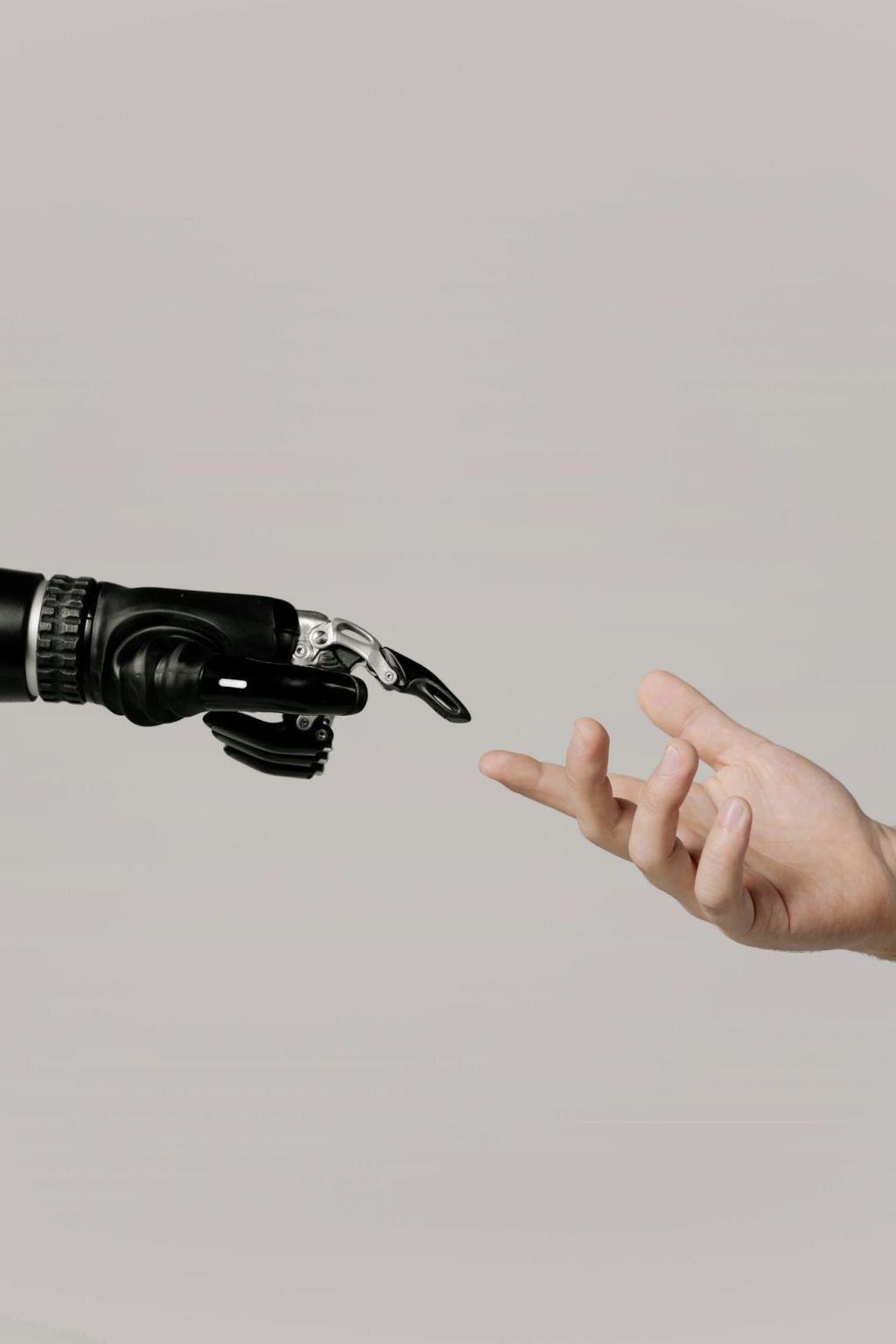
One of the most profound manifestations of AI’s power is its capacity for augmenting human intelligence and creativity. Instead of replacing human endeavor, AI often acts as a powerful co-pilot, enhancing our decision-making, automating mundane tasks, and freeing up cognitive resources for higher-level strategic thinking and innovation. In fields like scientific research, AI can accelerate the discovery of new materials or drug compounds by rapidly sifting through millions of variables. In artistic endeavors, generative AI tools can inspire new forms of expression or assist in the creation of intricate designs. This collaborative synergy between human ingenuity and artificial computational prowess is where the true disruptive potential of AI begins to shine, leading to unprecedented levels of efficiency and groundbreaking discoveries.
Furthermore, AI’s ability to personalize experiences and tailor solutions at scale is revolutionizing countless aspects of daily life. From customized educational programs that adapt to individual learning styles to healthcare interventions precisely designed for a patient’s unique genetic makeup, AI is moving us towards a future of hyper-personalized services. Financial institutions leverage AI to detect fraudulent activities in real-time, safeguarding consumers and businesses alike. Retailers employ AI to predict consumer preferences, optimize inventory, and enhance the online shopping experience. This ubiquitous integration of intelligent systems into our infrastructure is creating a more responsive and efficient world, catering to individual needs with remarkable precision.
Beyond individual applications, the true power of AI aggregates in its potential to address some of humanity’s most pressing global challenges. Climate modeling, disease outbreak prediction, and resource management are all areas where AI can provide critical insights and solutions at a scale and speed unattainable through traditional methods. By analyzing complex environmental data, AI can help predict and mitigate the impacts of climate change. In public health, AI can track and model the spread of infectious diseases, aiding in more effective containment strategies. This capacity for large-scale problem-solving underscores AI’s role not just as a tool for economic growth, but as a crucial ally in our collective pursuit of a more sustainable and equitable future.
In conclusion, the power of AI is multifaceted and ever-expanding, driven by its capacity for intelligent automation, data-driven insights, and sophisticated problem-solving. It is not merely a collection of algorithms but a foundational technology that is redefining what is possible across every sector. As AI continues to evolve, its impact will only deepen, promising a future where unprecedented levels of innovation, efficiency, and personalized experiences become the norm. Understanding and responsibly harnessing this immense power will be key to unlocking its full potential for the betterment of society and the advancement of human civilization.
 Concious Family
Leave a comment